Who Should Be in a Position of Power?
What Makes a Good King?
People have argued about this for thousands of years, and we still have not figured it out. Again and again, history gives us leaders who seem amazing at first, and then, a few years later, they end up acting just like every ruler before them. So which is it: Are we just bad at picking the right people, or does power itself change whoever ends up holding it?
This article will walk through four different answers to that question, from ancient philosophy to modern economics, and by the end, make a case for the second explanation.
Does Choosing A Good King Mean Just Picking A Good Person?
The first real answer to this question came from Plato, in his book The Republic, written around 375 BCE. His idea was the “philosopher king”, a ruler who does not actually want power, but gets it anyway because they’re wise and genuinely care about doing what’s right. Plato’s reasoning was simple: someone who is not chasing power for its own sake is much less likely to abuse it once they have it.
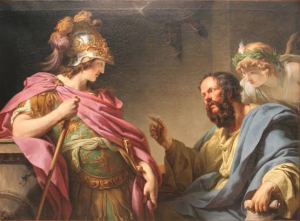
His idea was nice, and it only makes sense on paper. If someone’s values are solid, their leadership should be solid too.
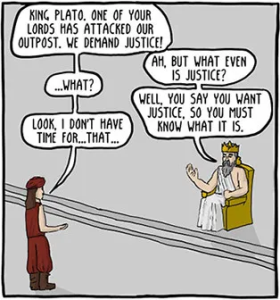
But there is an obvious problem: this only works if a person’s character stays the same once they are actually in power, and that is a big assumption. As we will see, it does not always hold up.
Maybe Good is not Enough
Almost 2,000 years later, Machiavelli came along with a completely different take in The Prince. He was not interested in what makes someone a good person. He wanted to know what actually keeps a ruler in power. His famous idea, virtù, is not about being morally good at all. It is about being skilled and flexible: knowing when to be fair and knowing when to be ruthless, depending on the situation.
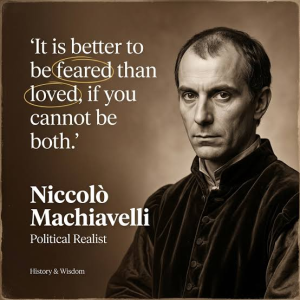
Machiavelli’s point was blunt: a ruler who insists on always being “good” is going to get taken advantage of, or thrown out, by someone less worried about playing fair.
This is a colder way of looking at things than Plato’s, but it is based on what actually happens, not on how things should work in theory. And that makes it easier to test against real history.
Does Power Just Corrupt People?
The third angle shows that it is less about who gets power and more about what power does to them afterward. The British historian Lord Acton wrote a line in an 1887 letter that is still quoted constantly today: power tends to corrupt, and absolute power corrupts absolutely. He went even further, saying that people with real authority almost always end up worse because of it, no matter how good they were to begin with.

This changes the whole conversation. The real question is not “who is virtuous enough to be trusted with power”. It is “does virtue even survive contact with power in the first place?” If Acton was right, then Plato’s solution only solves half the problem.
Sure, you picked a good person, but that does not mean they will stay that way.
The One Time We Actually Got a “Good King”
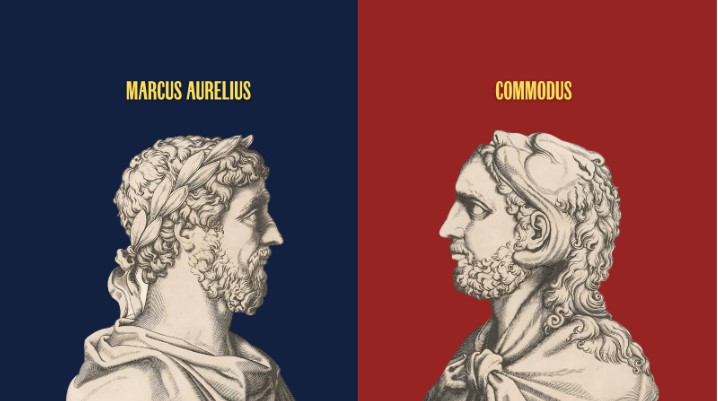
History gives us a pretty close real-life version of Plato’s philosopher king: the Roman emperor Marcus Aurelius, who ruled from 161 to 180 CE. He was a genuine Stoic philosopher who also happened to run the entire Roman Empire. His private notebook, later published as Meditations, was not written for anyone else to read. It was just him constantly reminding himself to stay humble, fair, and disciplined, even with almost unlimited power. Most historians agree his reign was one of Rome’s best.
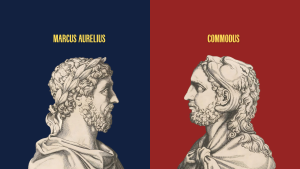
But here is the twist: Marcus Aurelius picked his own son, Commodus, to take over after him. Commodus turned out to be one of the worst, most self-centered emperors Rome ever had. So even the best real example we have of a “good king” fell apart the moment it came time to hand power to someone else. One good ruler, no matter how disciplined, is not a real solution. However, it is just one bad decision away from falling apart.
Maybe It Is Not About the Person At All
This is where things get interesting. Economists Daron Acemoglu and James Robinson wrote a whole book, Why Nations Fail (2012), arguing that a country’s success has less to do with who is in charge and a lot more to do with the systems around them. Countries that spread power out and protect people’s rights, what they call “inclusive” institutions, tend to do well over time. Countries that let a small group hoard all the power, which are “extractive” institutions, might grow for a while, but they usually stall out eventually, because the people in charge have zero reason to let things change.
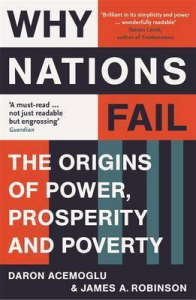
This flips the whole question around. Instead of asking “how do we find the right leader,” it asks “how do we build a system that still works even when the leader is not great.”
So, what is the answer?
Putting all four ideas together: Plato gives us a good starting point, but does not explain what happens to someone’s character once they actually hold power. Machiavelli explains how rulers survive, but not whether that survival is actually good for anyone else. Acemoglu points out that power itself is the risk, and Marcus Aurelius proves that even one of history’s best rulers could not stop things from falling apart right after him. Acemoglu and Robinson’s answer is the one that actually holds up: instead of relying on one person’s character, build a system that limits how much damage any single leader, good or bad, can do.
Based on all of this, strong institutions seem like a far more reliable safeguard than hoping we find the right person for the job.
Sources
- Plato’s Republic and the philosopher king, Britannica, World History Encyclopedia.
- Machiavelli, The Prince, and the concept of virtù, Stanford Encyclopedia of Philosophy, Britannica.
- Lord Acton’s 1887 letter to Bishop Mandell Creighton, Online Library of Liberty.
- Marcus Aurelius as philosopher-emperor and the succession of Commodus, World History Encyclopedia, Psychology Today.
- Daron Acemoglu & James A. Robinson, Why Nations Fail (2012), on inclusive vs. extractive institutions, To Summarise, Harvard WCFIA.