Why Having More Options Can Make Us Less Free?
Modern life is often sold to us as a story about freedom of choice: more products, more career paths, more ways to live. The usual assumption is that more options should make people better off, since nobody is forced to pick something they don’t want. But a growing amount of research suggests the opposite can also be true – that past a certain point, more choice creates more anxiety than freedom.
This piece looks at the research behind that idea, known as the paradox of choice, and why having fewer options can sometimes make people feel more free, not less.
What the Paradox of Choice Actually Says
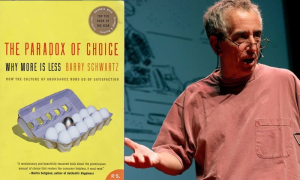
The term comes from psychologist Barry Schwartz, in his 2004 book The Paradox of Choice: Why More Is Less. His main argument is simple: having zero options is clearly limiting, but having too many options takes more mental effort to sort through, and that effort tends to create anxiety instead of reducing it. Instead of feeling like abundance, an overwhelming set of choices pushes people to spend time, energy, and self-doubt on decisions that usually do not deserve that much weight.
This goes against a common assumption that more options can only help, since anyone who does not want the extra ones can simply ignore them. Schwartz’s point is that people rarely ignore extra options that cleanly. Just having them there changes how choosing feels, even if they are never picked.
Real-World Evidence: The Jam Study
The most cited evidence for this comes from a 2000 experiment by psychologists Sheena Iyengar and Mark Lepper.
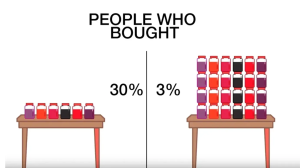
- At an upscale grocery store, they set up a tasting table with either 6 or 24 types of jam on different days.
- The bigger display pulled in more people; about 60 percent stopped to look, versus 40 percent at the smaller one.
- But when it came to actually buying, the pattern flipped: around 30 percent of people who saw 6 jams bought one, compared to only about 3 percent of those who saw 24.
- People who chose from the smaller set were also more satisfied with their pick.
Here is the catch with having lots of options: each new one makes choosing a little more stressful. You start to stress, second-guess yourself, and set your hopes sky-high. Then, even if you end up with a great result, it can still feel like it fell short of the “perfect” one you were hunting for.
That said, this study should not be treated as a settled fact. Later attempts to repeat the exact result have come back mixed, and some researchers could not reproduce the drop in purchases at all. That does not cancel out the original finding, but it is a reminder that choice overload is a real pattern, not a universal rule that works the same way every time.
Maximizers, Satisficers, and Regret
In his book The Paradox of Choice, Barry Schwartz distinguishes between two kinds of deliberators: Maximizers and satisficers. Both types of deliberators carefully consider their decisions, but in different ways:
- Maximizers accept only the best possible option.
- Satisficers accept an option that meets their standards.
He borrows an idea from economist Herbert Simon: the difference between maximizers, who search for the single best option, and satisficers, who are fine with something good enough.
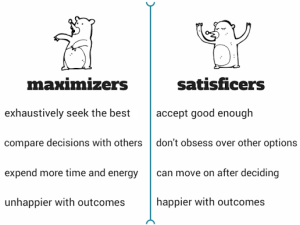
Maximizers tend to suffer more from having lots of choices, because more options mean more comparing, more research, and a higher bar for what counts as “the best.” Satisficers are far less bothered by a big menu of choices, since they are not trying to evaluate every single one.
This connects directly to regret. With more alternatives available, it is easier to imagine that a better option was sitting there somewhere, unchosen, and that comparison can quietly ruin satisfaction with a perfectly fine decision. Schwartz also points out that too much choice removes a useful excuse: when options are limited, a bad outcome can be blamed on circumstances, but when options are unlimited, it’s harder to blame anything other than your own decision.
Why Fewer Options Can Feel Like More Freedom
The clearest proof of this comes not from a lab, but from a decision with real money on the line: whether people sign up for a retirement plan at work.
- In a study covering almost 800,000 employees across hundreds of 401(k) plans, economists Sheena Iyengar, Wei Jiang, and Gur Huberman found that participation was higher in plans with a handful of investment funds than in plans with ten or more, and it dropped a little more with every extra fund added.
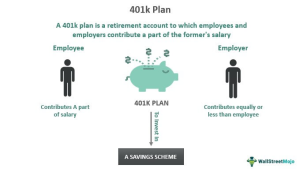
In short, giving employees more control over their investment choices did not make them more likely to use that control. It made a good number of them give up on saving altogether, simply because the decision had gotten too demanding to deal with.
The opposite experiment makes the same point even more clearly. Instead of adding options, many employers started removing the decision itself, automatically signing new hires up for a 401(k) at a default rate, while still letting them opt out anytime.
- According to research from Vanguard, covering more than 800,000 new hires, participation almost tripled under this system: about 91 percent, compared to 28 percent under the usual sign-up-yourself method.
The gap was biggest among younger and lower-income workers, the people most likely to be priced out of saving in the first place. Nobody’s freedom to opt out was taken away. What changed was that the default took the decision-making burden off their hands. The result was not less freedom – it was more people actually using the freedom they already had.
Put together, these two findings turn the usual logic upside down. Freedom usually gets measured by the number of options available, but feeling free also depends on being able to actually reach a decision and feel okay about it. When choosing becomes a smaller, more structured task – fewer funds to compare, a sensible default already set up – people are a lot more likely to act in their own interest than when they are handed unlimited choice and left to figure it out alone.
Conclusion
None of this means choice itself is bad – having zero options is a real kind of restriction, and Schwartz never argues otherwise. What the research shows is that the relationship between choice and satisfaction is not a straight line. Satisfaction rises as options go from very few to a moderate number, but past that point, more choice adds mental and emotional cost without much benefit. Because of this, the sense of freedom people associate with unlimited choice might be, at least partly, an illusion.
Actually feeling free might depend less on how many options exist, and more on how manageable the choosing itself feels.
Sources
- Schwartz, B. (2004). The Paradox of Choice: Why More Is Less
The Decision Lab overview; Experience Life summary - Iyengar, S., & Lepper, M. R. (2000). “When Choice Is Demotivating: Can One Desire Too Much of a Good Thing?” Journal of Personality and Social Psychology, 79(6), 995–1006 Psychological Science / Observer summary; on replication concerns ScienceDirect
- Maximizers vs. satisficers
To Summarise book summary - Iyengar, S. S., Jiang, W., & Huberman, G. (2004). “How Much Choice Is Too Much? Contributions to 401(k) Retirement Plans” on approximately 800,000 employees
ResearchGate; DOL CLEAR review - Vanguard, “Automatic Enrollment: The Power of the Default” (2021), on ~814,000 newly hired employees
ASPPA summary