The Prison of the Future
There is a certain kind of life plan that sounds responsible on paper: work hard now, enjoy it later. Finish the degree, then relax. Build a career, then travel. Save the money, then actually live. It is a fine strategy in small doses.
The problem starts when “later” never really arrives when the present keeps getting treated like a waiting room for a future that keeps getting pushed back. Psychology has a fair amount to say about why this pattern forms, whether it actually pays off, and what it costs along the way.
The Trait Called “Future”
Psychologist Philip Zimbardo, known for decades of research on how people relate to time, argued that everyone develops a habitual bias toward the past, the present, or the future and that this bias works less like a passing mood and more like a stable personality trait.

In his framework, a strong “Future” orientation describes someone who plans constantly, sets goals, and is willing to delay gratification for a later payoff while, as Zimbardo himself put it, often forgetting to actually enjoy the present along the way.
Zimbardo was not saying a future orientation is bad by itself – it is linked to real benefits, including academic success and long-term planning. His main finding was about balance: people whose sense of time is dominated by any single orientation, including an intense future focus, tend to do worse than people with a more balanced mix that still leaves real room to enjoy the present. In other words, an extreme future focus is not just ambition – it is a lopsided relationship with time that comes with its own costs, even when it also leads to real achievement.
When Delaying Gratification Does Not Pay Off
The idea that sacrificing now for later is a simple path to a better life comes largely from Walter Mischel’s famous “marshmallow test” where young children were offered one treat now or two treats later if they could wait.
In Mischel’s original follow-up studies, children who waited longer were later found to do better on a range of outcomes, including academic performance. This became one of the most cited findings in psychology, usually summed up as: the ability to delay gratification predicts a better future.
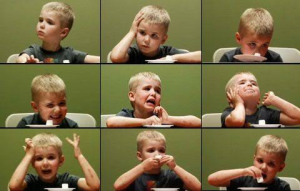
A large 2018 replication by researchers Tyler Watts, Greg Duncan, and Haonan Quan complicated that story quite a bit. Using a much bigger and more economically diverse sample than the original study, they found that the link between a child’s ability to wait and their outcomes years later shrank significantly once things like family background and early environment were taken into account. Watts concluded that trying to improve a child’s future just by training their ability to delay gratification, without addressing the actual conditions of their life, probably would not change much on its own.
This goes against the simple “sacrifice now, benefit later” story: being willing to wait is not, by itself, a reliable path to a better future – it is tangled up with the circumstances someone is already in, and treating pure self-denial as the key ingredient gives the original research more credit than it actually earned.
Worry Is Just Anxiety About What Has Not Happened Yet
There is also a clinical side to living too much in the future. Generalized anxiety disorder is officially defined around what psychiatrists call “apprehensive expectation”: persistent, hard-to-control worry about future events, as opposed to rumination, which focuses on the past.
According to the National Institute of Mental Health, about 2.7 percent of U.S. adults experience generalized anxiety disorder in a given year, and an estimated 5.7 percent will experience it at some point in their life. So chronic future-focused worry, at a clinical level, is actually pretty common, not rare.
This matters for the whole idea of living for “someday”, because the same mental process that makes future-focused planning useful in small doses is also what produces this kind of constant apprehension when pushed too far. A future orientation that stays healthy is one a person can actually set down sometimes; one that turns into nonstop apprehensive expectation is, clinically, a real source of distress.
The line between “planning ahead” and “living in dread of what’s coming” is not always obvious from the inside, which is part of why an extreme future focus is so easy to mistake for simple hard work.
Living Now, On Purpose
Put all this together, and it points to a fairly specific warning, not a blanket argument against planning or ambition. A future orientation brings real benefits as Zimbardo’s own research shows that. But an orientation that crowds out the present entirely tends to do worse than a more balanced one. The evidence that pure self-denial reliably buys a better future is weaker than people usually assume, once other factors are accounted for.
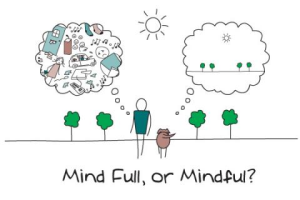
The same tendency toward future-focused thinking that supports healthy planning can, pushed to its extreme, look just like a diagnosable anxiety condition that millions of people actually live with. None of this means giving up on long-term goals. It just argues against treating the present like something to get through on credit, betting that some distant “someday” will eventually pay it all back with interest, a bet the research suggests is far less sure than it feels while you’re making it.
Sources
- Philip Zimbardo’s Time Perspective Theory, including the “Future” orientation and balanced time perspective.
Zimbardo.com; balanced time perspective and well-being - Mischel’s original marshmallow test findings and the Watts, Duncan, & Quan (2018) replication, Psychological Science.
NYU Steinhardt summary; Psychological Science Observer - DSM-5 criteria for generalized anxiety disorder and “apprehensive expectation”.
Journal of Psychiatry Reform; Managed Healthcare Executive / AMCP Nexus 2025