Why We Root for the Underdog
Across sports, politics, business, and fiction, the same pattern keeps showing up: the competitor expected to lose often gets more sympathy than the one expected to win. This is usually called the underdog effect, and psychologists have studied it directly.
The research points to a few overlapping reasons: identifying with struggle, caring about fairness, and the basic shape of the stories people find satisfying.
This article walks through that research and explains why an easy win is usually less compelling than a hard-fought one.
What the Research Actually Shows
The underdog effect was tested directly in four studies published in 2008 by psychologists Eugene Kim, Scott Allison, and their colleagues.
- In two of the studies, people consistently rooted for whoever was framed as the underdog, across sports, business, and art competitions, regardless of which side actually deserved to win.
- A third study took personality and story out of the equation completely. Participants watched short animated clips of simple geometric shapes, where some shapes were shown struggling to finish a task and others were not. Even with no face, no backstory, and no real identity involved, people still felt more sympathy and support for the struggling shapes. This suggests the pull toward an underdog is not just about liking a specific person or team, it reacts to visible struggle itself.
- A fourth study showed where this effect has limits. Support for the underdog was strongest when people felt personally connected to the outcome and when the outcome actually mattered to them. In low-stakes or impersonal situations, the preference weakened a lot.
In other words, rooting for the underdog is not automatic, it depends on how invested the person watching actually feels.
Fairness and How Much Effort Looks Like
A related study, led by psychologist Joseph Vandello along with Nadav Goldschmied and David Richards, looked into why underdogs get this kind of support in the first place.
- In one experiment, people watched two unfamiliar basketball teams play, with one team randomly labeled the underdog. People who believed a team was the underdog consistently assumed that team was trying harder, and that assumption was the strongest predictor of how much people liked and supported them.
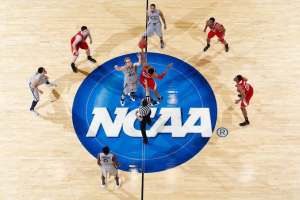
Basically, if a competitor has fewer advantages and still shows up to compete seriously, people assume they must be working harder for it, and that effort earns respect no matter how the match ends.
- A second experiment tested how far this support goes. People were told about a team with a low chance of winning, then asked if they would still support it as an underdog if it turned out that team actually had more resources than its opponent. In that case, support mostly disappeared. The researchers concluded that just having a low chance of winning is not enough on its own, the disadvantage also has to feel real and undeserved.
This points to a fairness-based explanation: people seem to root for underdogs partly to correct an imbalance they notice, and that only works if the imbalance looks genuine, not staged.
Struggle as the Shape of a Good Story
This same preference for struggle shows up separately in research on storytelling. Writer Kurt Vonnegut, in a lecture based on his graduate thesis, argued that most popular stories can be drawn as a simple graph tracking a character’s luck from bad to good over time. The most common and best-loved shape he found, which he called “Man in a Hole”, follows a character who starts out ordinary, falls into serious trouble, and then fights their way back to somewhere better than where they started. Vonnegut’s point was that the struggle is what makes the recovery feel meaningful: a character who is successful the whole way through, with no real setback, makes for a much less satisfying story.
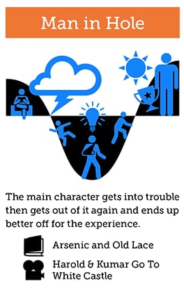
This lines up closely with the underdog research. A character, team, or competitor who wins without any visible difficulty gives the audience nothing to really invest in, because there is no tension to resolve. Someone who visibly struggles against a real disadvantage creates exactly the kind of story arc people are drawn to, whether it is fiction or a live game.
So the underdog effect is not just a quirk of how people judge competitors, it reflects a much broader preference for struggle-and-recovery that shows up across almost every kind of storytelling.
Conclusion
In summary, this research shows that rooting for the underdog isn’t one single instinct, but the result of several things working together. People connect with visible effort and struggle, even with no personality or backstory attached.
They support the disadvantaged side partly out of a sense of fairness, which is why that support disappears once the disadvantage stops looking genuine. And the struggle-then-recovery pattern matches one of the most popular structures in storytelling, suggesting people are drawn to underdog stories for the same basic reason they are drawn to any good story: an easy win does not resolve anything, while a hard-won one gives the audience something real to feel.
Sources
- Kim, J. W., Allison, S. T., Eylon, D., Goethals, G. R., Markus, M. J., Hindle, S. M., & McGuire, H. A. (2008). “Rooting for (and Then Abandoning) the Underdog.” Journal of Applied Social Psychology.
Wiley abstract - Vandello, J. A., Goldschmied, N. P., & Richards, D. A. R. (2007). “The Appeal of the Underdog.” Personality and Social Psychology Bulletin, 33(12), 1603–1616
SAGE abstract; EurekAlert summary - Kurt Vonnegut’s “Shapes of Stories” and the “Man in a Hole” structure
The Story